

 Facebook
 X
X
 Pinterest
 Copy Link
Utah Housing Market Forecast 2025: Sanpete County Real Estate Trends for First-Time Home Buyers

2025 Utah Housing Market Forecast: First-Time Home Buyer Guide for Sanpete County

Thinking about buying your first home in Sanpete County, Utah? You’re not alone-and 2025 might be the perfect time to make your move. The Utah housing market is always changing, and this year brings some big shifts that could help prospective first-time buyers like you. In this guide, we’ll break down market dynamics in the real estate market, how home prices are trending, and what to expect if you’re looking for homes for sale in Utah. Whether you’re curious about listings, inventory levels, or just wondering if now is a good time to buy a home in Utah, we’ve got answers. We’ll also share helpful tips, programs for first-time buyers, and valuable insights to help you feel more confident in your search. Let’s dive in and explore what the 2025 housing market looks like in Sanpete County!
Sanpete County Housing Market Overview
What Are the Current Trends in the Sanpete County Housing Market?
In 2025, Sanpete County is a tale of two markets. For homes under $300,000, it’s a hard buyers market-meaning it’s tough on buyers. These homes are getting multiple offers, often within the first few days on the market. Many first-time buyers are in this price range, so the competition is real. If you’re shopping below $300K, you’ll need to act fast and come prepared. These homes often go over asking and don’t leave much room for negotiation.
How Is the Sanpete County Real Estate Market Performing?
Inventory might look decent, but a lot of what’s on the market isn’t truly available to the average first-time buyer. Homes that are sitting often have problems-think older roofs, foundation issues, or other repairs that make them un-loanable for FHA, VA, or USDA financing. These homes might need cash or conventional financing, which most first-time buyers don’t have.
That said, if your budget allows you to look above $300,000, the market softens a bit. Homes in that range are staying on the market longer, and there may be more flexibility on price or terms. For the right person, this could be a great opportunity-though homes in this range still need to be in loan-ready condition to make sense for first-timers.
What Are the Latest Homes for Sale in Sanpete County?
The newest listings under $300K that are clean and move-in ready are getting snapped up quickly. If you’re using financing, make sure your agent knows how to spot homes that qualify for your loan type. Anything that’s been sitting longer than 30-45 days likely has issues affecting its value or loan eligibility, so please contact your agent for further insights. Even though Sanpete is one of the more affordable areas in Utah, the best homes still go fast. Stay on top of the MLS, and consider setting alerts so you don’t miss your window when a good one pops up.
💡 Looking for homes that qualify for FHA, VA, or USDA financing?
Let me help you find properties that match your budget and your loan. Contact me today to get a custom list built for first-time buyers in Sanpete County.
Utah Housing Prices and Inventory Trends in 2025
How Are Housing Prices Changing in Utah?
Across the state, housing prices in Utah have mostly held steady through early 2025. Some areas are seeing slight increases, while others are leveling off. The real story is in the details-entry-level homes under $300,000 are still in high demand and continue to move quickly, especially in more affordable counties like Sanpete. Higher-priced homes, however, are staying on the market longer. This includes many listings above $300K, which may offer more negotiating power. These homes are often newer, larger, or located in areas with less urgency.
How Do Sanpete County Home Prices Compare to Nearby Markets?
Sanpete County remains one of the more affordable areas in the state. At every price point, you get more for your money in Sanpete. Not only do you often receive more land, but you can also find higher-finished homes compared to similar-priced properties in Utah County, Salt Lake, or other northern markets. This added value is a big draw for buyers looking for quality and space.
What Is the Current Inventory Level of Homes for Sale?
As of now, there are only 17 homes listed at $300,000 or below in Sanpete County, and the majority do not qualify for FHA, VA, or USDA financing due to condition issues. That makes truly loan-ready homes extremely limited for first-time buyers. Inventory above $300K is more available, but movement in that range is slower, offering potential opportunities for buyers with more flexible financing.
How Will Rising Inventory Affect You?
As the selling season heats up, more homes are expected to hit the market in Sanpete County. While this may increase overall inventory, competition will remain strong for homes priced at $300,000 and under. This price range continues to attract the most attention, especially from first-time buyers using FHA, VA, or USDA loans. Even with more listings, you should expect fast-moving conditions, multiple offers, and limited negotiation room on well-priced, loan-ready homes.
Navigating the Utah Real Estate Market as a First-Time Buyer
How to Make Informed Decisions in 2025?

To make smart choices in 2025, first-time buyers need to stay informed about local market trends and understand how different loan types impact their options. Working with a knowledgeable local agent who understands Utah’s housing market-especially in rural counties like Sanpete-is key. Pay attention to median list prices, housing supply, and loan eligibility requirements so you can move fast when the right home appears.
What Tips Can Help you in a Changing Market?
- Get pre-approved early so you know your budget and can make a strong offer.
- Focus on homes that are loan-ready for FHA, VA, or USDA programs if you’re using one.
- Don’t waste time on homes that have been sitting unless you’re prepared to deal with repair issues.
- Be flexible on location or features, especially with home values in the under $300K range.
- Use alerts from the MLS and stay in close contact with your agent to jump on new listings.
- Have money set aside for your down payment and closing costs-asking sellers to cover these in your offer can weaken your position, especially in a multiple-offer situation.
How to Assess the Best Time to Buy a Home in Utah?
While there’s no perfect time to buy, spring and summer tend to bring more listings-giving you more options to choose from. That said, competition also increases during these months. If you’re ready financially and find a home that meets your needs, don’t wait. In today’s market, timing the market perfectly is less important than being prepared when the right home becomes available.
Using the MLS to Your Advantage
What Role Does the MLS Play in Buying a Home in Utah?
The Multiple Listing Service is the main tool real estate agents use to list and search for homes. It’s the most accurate and up-to-date source for homes actively listed for sale in Utah. Unlike third-party websites, it shows real-time data verified by brokerages, including price changes, days on market, and detailed property information. It’s the best place to get information deemed reliable about homes in your target area.
How Can you Use the MLS to Find Homes for Sale?
First-time buyers can work with their agent to set up a personalized property search based on their budget, loan type, location, number of bedrooms, and more. This allows you to see new listings the moment they hit the market, giving you a crucial edge in a fast-moving market like Sanpete County. You’ll also be able to track housing supply, price trends, and compare homes across regions like Utah County or Salt Lake if you’re exploring nearby areas.
Why Working With a Local Agent Matters
In today’s competitive Utah housing market-especially in places like Sanpete County-working with a local real estate agent isn’t just helpful, it’s essential. A good agent will guide you through every step of the process, from getting pre-approved to writing a strong offer that stands out. Local agents understand the nuances of the market that online tools and national websites can’t show you. We know which homes are likely to pass FHA, VA, or USDA appraisals, which listings are overpriced, and which ones are likely to receive multiple offers. We can also spot red flags that could cost you time or money-like a listing that’s been sitting because it doesn’t qualify for financing. In a fast-moving market, timing is everything. A local agent can act quickly on new listings, connect directly with the seller’s agent, and guide you on how to make your offer competitive-without overpaying or missing key protections. If you’re serious about buying a home in Utah, especially as a first-time buyer, having a trusted local agent in your corner can be the difference between getting the home you want-or missing out.
Final Thoughts and Resources for First-Time Home Buyers
Where to See More Real Estate Market Trends
While it’s easy to get overwhelmed watching the state or national news, the only market that really matters is the one you want to live in. If you’re buying in Sanpete County, that’s where your focus should be. I publish a monthly Sanpete County market report so you can stay informed without getting distracted by data from counties that don’t apply to your search. Rates are still high in 2025, but getting in early can still be a smart move. You can always refinance later if rates drop-waiting for the “perfect” time could mean missing out on the right home. Paying a little more now might give you the chance to secure a better home before prices or competition rise again.
Helpful Tools and Resources in Utah

Being prepared is key. Here are tools, tips, and programs that can help make your home buying experience smoother in Sanpete County:
- Create a Wants vs. Needs List
Know what features you can’t live without and where you’re willing to compromise. This is especially helpful when inventory is tight. - Get Pre-Approved Early
Understand your full buying power before you shop. You’ll be able to act fast and make stronger offers. - Work With a Great Lender
A good lender makes the process smoother, explains your options, and helps you stay competitive. A bad lender can delay or even derail your deal. - Use a Mortgage Calculator
Estimate your monthly payments and stay within your budget. - Set Up Alerts
Get notified the moment a new home hits the market in your price range-timing is everything under $300K. - Utah Housing Corporation – First Home Loan
A popular low-interest mortgage for first-time buyers with credit scores of 660+ that may include down payment assistance.
Learn more → - Utah Housing Down Payment Assistance
Acts as a second mortgage to cover down payment and closing costs. Must use a UHC-approved lender and meet credit and loan requirements. - USDA Rural Development Loans
Sanpete County qualifies for USDA financing. No down payment is required for eligible people with moderate incomes.
Check eligibility → - FHA & VA Loans
FHA loans allow for 3.5% down with more flexible credit requirements. VA loans offer $0 down and no mortgage insurance for eligible veterans. - Monthly Market Updates
I provide monthly updates on the Sanpete County housing market so you can make informed, local decisions-without being distracted by statewide trends.
Connect With a Local Expert in Sanpete County
The best thing you can do as a first-time home buyer? Rely on an experienced local agent who knows the market and can guide you through every step. From spotting homes that will pass FHA, VA, or USDA guidelines to crafting competitive offers and negotiating repairs, your agent is your best resource. I’m David Sedlak with Century 21 Essentials Realty, and I specialize in helping first-time buyers find success right here in Sanpete County. Contact me today to get a custom property search, receive personalized updates about the market, or answers to any questions you have about buying your first home.
Discover More Fun in Ephraim, Utah: Events, Festivals, and Outdoor Adventures

Discover More Fun in Ephraim: Events, Festivals, and Outdoor Adventures

If you’re looking for fun things to do in Ephraim, UT, you’re in the right place! Whether you’re a long-time resident, a newcomer, or just visiting, Ephraim offers a variety of exciting events, outdoor adventures, and community activities throughout the year. From festivals and sports to hiking and local entertainment, there’s something for everyone.
Let’s dive into the best things to do and make the most of this charming small town in Sanpete County!
Annual Events & Festivals in Ephraim
Celebrate Ephraim’s culture, history, and community spirit with these must-attend events!
Ephraim Scandinavian Festival (May – Annual Event)
One of Ephraim’s biggest events is the Scandinavian Festival, celebrating the town’s rich Danish heritage. This event brings the community together with:
✔️ Traditional Scandinavian food, music, and dancing
✔️ Historical reenactments at Fort Ephraim
✔️ A 5K race, craft booths, and a lively parade
If you love culture, history, and great food, this is an event you won’t want to miss!
Pioneer Days Celebration (July 24th – Utah’s Pioneer Day)
Every July, Ephraim joins the rest of Utah in celebrating Pioneer Day, a holiday honoring the state’s pioneer history. You’ll find:
✔️ Fireworks, rodeos, and a festive parade
✔️ Carnival rides, games, and food vendors
✔️ Live music and a community BBQ
It’s the perfect event for families, history lovers, and anyone who enjoys a fun summer celebration!
Snow College Events (Year-Round Activities)
As the home of Snow College, Ephraim has a lively arts and entertainment scene. You can enjoy:
✔️ Concerts, theater performances, and student showcases
✔️ Snow College Badgers football games (a big community favorite!)
✔️ Guest lectures, cultural events, and art exhibits
No matter the season, Snow College always has something happening!
Outdoor Adventures & Recreation Near Ephraim
Enjoy Utah’s breathtaking landscapes with these outdoor activities!
Hiking & Camping in Ephraim Canyon
If you love the outdoors, Ephraim Canyon is a must-visit. With miles of scenic trails, it’s perfect for:
✔️ Hiking, mountain biking, and off-roading
✔️ Camping under the stars with gorgeous mountain views
✔️ Wildlife spotting and photography
Whether you’re looking for an easy day hike or a rugged backcountry adventure, Ephraim Canyon has it all!
Palisade State Park (10 Minutes from Ephraim)
Just a short drive from town, Palisade State Park is a great spot for:
✔️ Boating, fishing, and paddleboarding on the lake
✔️ A scenic 18-hole golf course
✔️ Family-friendly hiking trails and picnic spots
This is a local favorite for summer fun, whether you want to relax or stay active!
Skyline Drive Scenic Byway (Perfect for Day Trips!)
For a breathtaking drive through Utah’s mountains, take a trip along Skyline Drive. This high-elevation road offers:
✔️ Incredible views of Sanpete County
✔️ Fishing at high-altitude lakes
✔️ Camping and OHV (Off-Highway Vehicle) trails
If you love road trips, photography, or outdoor adventures, Skyline Drive is the perfect place to explore!
Local Entertainment & Family Activities
Find year-round fun right here!
Ephraim City Recreation
For those who love staying active, the Ephraim Recreation has plenty to offer:
✔️ Basketball courts and fitness programs
✔️ Community sports leagues for all ages
✔️ Indoor swimming pool and fitness classes
This is a great spot for families and fitness enthusiasts to stay active year-round!
Movie & Game Nights at Snow College
Looking for a fun night out? Snow College hosts:
✔️ Outdoor movie nights in the summer
✔️ Game nights, trivia, and student performances
Perfect for a casual evening with friends or family!
Seasonal Activities & Holiday Celebrations
Celebrate every season with these fun activities!
Fall Fun – Pumpkin Patches & Corn Mazes
Autumn in Ephraim means crisp air, changing leaves, and seasonal festivals. Enjoy:
✔️ Pumpkin patches and hayrides at local farms
✔️ Haunted corn mazes and spooky events
A perfect way to get into the fall spirit! 🍂
Winter Activities – Snowmobiling & Christmas Events

Winter brings snow and holiday cheer, with activities like:
✔️ Snowmobiling and cross-country skiing in the mountains
✔️ Christmas tree lighting and holiday parades
Bundle up and enjoy the magic of winter in Ephraim! ❄️
Spring & Summer – Outdoor Farmers’ Markets & Music Festivals
Warmer weather means fresh produce, live music, and community fun. Visit:
✔️ Farmers’ market for local fruits, veggies, and baked goods
✔️ Live concerts in the park
It’s the best way to enjoy the beauty of summer while supporting local vendors!
Plan Your Next Adventure in Ephraim!
From festivals and outdoor fun to community events and local entertainment, there’s always something happening!
🏡 Thinking about making Ephraim your home? Whether you’re looking to buy, sell, or invest in real estate, I’d love to help you find the perfect place.
Living in Ephraim, UT: Cost of Living and Community Insights

Living in Ephraim, UT: Understanding the Cost of Living and Community Insights
Thinking about moving to Ephraim, UT? Whether you’re considering a relocation, looking to buy a home, or just curious about the cost of living, this guide will provide everything you need to know about what it’s like to live in Ephraim.
Located in Sanpete County, Ephraim is known for its small-town charm, affordability, and strong sense of community. As the largest city in the county, it offers a unique blend of rural lifestyle with access to essential amenities, employment opportunities, and outdoor recreation. With a median home price lower than the national average and a cost of living that remains affordable, Ephraim is an attractive place for families, retirees, and investors alike.
In this guide, we’ll cover:
✔️ Housing costs and real estate trends
✔️ Cost of living breakdown (utilities, groceries, healthcare, and taxes)
✔️ Job market, economy, and major industries
✔️ Quality of life, schools, and local amenities
✔️ Pros and cons of living in Ephraim compared to other Utah cities
By the end of this article, you’ll have a clear understanding of whether Ephraim is the right place for you. Let’s dive in!
What is the Cost of Living in Ephraim, UT?

The cost of living in Ephraim, UT, is one of its biggest draws, offering affordability compared to many other parts of Utah and the U.S. While the area has seen some price increases in recent years, housing costs, utilities, and everyday expenses remain lower than the national average.
According to recent census data and economic reports, Ephraim’s cost of living index is lower than the U.S. average, making it an attractive option for families, retirees, and those seeking a quieter, more affordable lifestyle.
How does the cost of living in Ephraim compare to the national average?
Compared to the U.S. average, the cost of living in Ephraim is significantly lower in many categories, particularly in housing and utilities. However, some costs, such as groceries and healthcare, may be closer to or slightly above national levels due to limited local providers.
📊 Key Cost Comparisons:
- 🏡 Housing Costs: Lower than the national average – Median home prices in Ephraim are more affordable than in larger Utah cities like Provo and Salt Lake City.
- 💡 Utilities: Less expensive than the national average – Electricity and water bills tend to be affordable, although winter heating costs can rise.
- 🚗 Transportation Costs: Lower than in larger urban areas – Shorter commutes and fewer traffic-related expenses.
- 🛒 Groceries & Essentials: Slightly higher than the national average – Due to limited retail options, prices for some goods may be higher than in bigger cities.
- 🏥 Healthcare Costs: Close to the U.S. average – While local healthcare is available, some specialized services require travel to larger cities like Provo or Salt Lake City.
What are the key components of the Ephraim cost of living index?
The cost of living index is calculated based on several categories, including housing, groceries, utilities, transportation, healthcare, and taxes. Below is a breakdown of Ephraim’s major expense categories:
✔️ 🏡 Housing Costs – The largest expense for most residents. Home prices and rental rates have increased, but Ephraim remains more affordable than many parts of Utah.
✔️ 🛒 Grocery Prices – Prices can be higher than in urban areas due to limited options, but local markets help offset costs.
✔️ 💡 Utilities – Typically less expensive than the national average, except for seasonal heating costs.
✔️ 🚗 Transportation – With a short average commute time, transportation costs are lower than in major metro areas.
✔️ 🏥 Healthcare Expenses – Close to the national average, but availability of specialized care is limited in Ephraim.
✔️ 💰 Taxes – Property tax rates are reasonable, and Utah’s income tax rate (4.85%) applies to Ephraim residents.
Are groceries and healthcare affordable in Ephraim?
🛒 Grocery Costs in Ephraim
- Groceries in Ephraim are slightly more expensive than the national average due to limited supermarket options.
- Residents shop at local markets, Fresh Market, and Walmart in nearby cities for affordable essentials.
- Many locals grow their own food or shop at farmers’ markets to save money.
🏥 Healthcare Costs in Ephraim
- General healthcare costs are close to the U.S. average, but specialized medical services often require travel.
- Major providers in the area include:
- Sanpete Valley Hospital (Located in nearby Mount Pleasant, about 15 minutes away.)
- Ephraim Clinic (Provides family medicine and basic healthcare services.)
- Health insurance and prescription costs in Ephraim align with national averages, but options for specialists and major procedures are limited.
✅ Final Takeaway: While groceries and healthcare in Ephraim can be slightly more expensive than in urban areas, low housing and utility costs help balance the overall affordability of living in Ephraim.
What is the Population and Demographics of Ephraim?
Ephraim, UT, is the largest city in Sanpete County and a hub for both residents and students attending Snow College. Known for its rural charm, strong community, and steady growth, Ephraim continues to attract families, retirees, and young professionals looking for an affordable and peaceful place to live.
Below, we’ll explore the current population, demographic composition, and how Ephraim compares to other cities in Utah.
What is the current population of Ephraim?
📊 According to the 2020 U.S. Census, Ephraim’s population was estimated at 7,463 residents. Since then, steady growth has pushed the number closer to 8,000 in 2024, driven by new housing developments, economic stability, and student enrollment at Snow College.
Key Population Facts:
- 🌎 Ephraim accounts for nearly 15% of Sanpete County’s total population.
- 🏡 Population growth rate: +2.1% annually (compared to the Utah average of 1.6%).
- 🎓 Snow College students make up a significant portion of the population, especially during the school year.
- 👨👩👧👦 Family-friendly community with a high percentage of young families.
What’s Driving Population Growth?
1️⃣ Affordable housing compared to Utah’s metro areas.
2️⃣ Expansion of Snow College and local businesses.
3️⃣ People seeking a quieter, small-town lifestyle.
✅ Takeaway: Ephraim remains a fast-growing rural city, attracting both permanent residents and seasonal student populations.
What are the demographics of residents in Ephraim?
Ephraim’s population is diverse in age, background, and occupation, with a strong influence from education, agriculture, and local industries.
📊 Demographic Breakdown (2024 Estimates):
- 🏡 Median Age: 23.5 years (younger than the U.S. average due to Snow College students).
- 👨👩👧👦 Households: 60% families, 40% non-family households.
- 🏢 Employment Sectors:
- 🎓 Education (Snow College, local schools).
- 🌾 Agriculture (farming, livestock, dairy production).
- 🏗 Construction & Trades (growing real estate market).
- 🏪 Retail & Local Businesses.
- 🌎 Ethnic Composition:
- 💼 85% White (predominantly Scandinavian descent, tied to early settlement history).
- 📚 10% Hispanic or Latino.
- 🛠 2% Asian.
- 🏡 3% Other groups.
✅ Takeaway: Ephraim has a young and family-oriented population, shaped by its educational institutions, agricultural heritage, and growing economy.
How does the population of Ephraim compare to other cities in Utah?
Although Ephraim is the largest city in Sanpete County, it is smaller than many of Utah’s growing suburban areas. However, its affordability and job opportunities make it an attractive alternative to more expensive cities.
📊 Population Comparison (2024 Estimates):
| City | Population | Median Home Price | Median Age | Major Industry |
|---|---|---|---|---|
| Ephraim, UT | ~8,000 | $379,999 | 23.5 | Education & Agriculture |
| Manti, UT | 3,700 | $365,000 | 35.2 | Government & Tourism |
| Spring City, UT | 1,100 | $450,000 | 42.8 | Arts & Farming |
| Nephi, UT | 6,500 | $410,000 | 31.5 | Manufacturing & Retail |
| Provo, UT | 115,000 | $475,000 | 24.8 | Education & Tech |
How Ephraim Stands Out:
✔️ Lower housing costs compared to Utah County & Provo.
✔️ Younger population due to Snow College’s influence.
✔️ More rural, but growing steadily.
✅ Takeaway: Ephraim balances affordability, job opportunities, and small-town charm, making it a great option for those seeking a peaceful lifestyle without sacrificing access to education and employment.
How is the Housing Market in Ephraim?

The Ephraim housing market has been steadily growing, attracting homebuyers, investors, and developers looking for affordable real estate in Utah. While home prices have risen over the last few years, Ephraim remains more affordable than many larger Utah cities.
Whether you’re looking for a single-family home, a new construction property, or land for a homestead, Ephraim offers diverse housing options at competitive prices. As a local REALTOR® with Century 21 Essentials Realty, I can help you navigate the market, find the best deals, and secure the right home or investment property in Ephraim.
What is the median home price in Ephraim?
As of 2024, the median home price in Ephraim is $379,999, reflecting a 1.6% increase from the previous year.
📊 Key Housing Market Stats (2024):
- 🏡 Median Home Price: $379,999 (Up 1.6% year-over-year).
- 📉 Inventory Levels: 22 homes available (Low inventory = competitive market).
- 🏠 Average Price per Sq. Ft.: $202.00 (Up 14.77% from last quarter).
- ⏳ Days on Market: 113 days (Homes are selling slower than in larger Utah cities).
- 📈 Year-over-Year Growth: 15.6% increase in home values (Ephraim’s market is appreciating steadily).
Thinking about buying or selling a home in Ephraim? 🏡 With market trends shifting, having the right REALTOR® on your side is crucial. If you want to explore available listings or get a free market evaluation of your home, contact me today!
What types of homes can you find in Ephraim?
Ephraim’s real estate market offers a mix of home styles, catering to families, retirees, students, and investors.
🏡 Common Home Types in Ephraim:
✔️ Single-Family Homes – The most common, ranging from older ranch-style homes to modern new builds.
✔️ Townhomes & Condos – Limited availability, but growing near Snow College.
✔️ New Construction – Developments are increasing, offering modern floor plans and energy-efficient designs.
✔️ Historic Homes – Some properties date back to the late 1800s and early 1900s, reflecting Ephraim’s Danish heritage.
✔️ Farm & Ranch Properties – Popular for those looking for acreage, homesteads, or livestock-friendly land.
📌 Neighborhood Trends:
- Downtown Ephraim – Close to schools, shops, and Snow College, great for families and students.
- North & South Ephraim – Offers larger lots and newer developments.
- Rural Outskirts – More land-based properties, ideal for homesteads or farming.
Is housing in Ephraim considered affordable?
Ephraim’s housing market remains more affordable than major Utah cities, but home prices have been increasing steadily.
📊 Housing Affordability Breakdown (2024):
| Category | Ephraim, UT | National Average | Difference |
|---|---|---|---|
| Median Home Price | $379,999 | $436,800 | ⬇️ 13% Lower |
| Rent (2-Bedroom Apt.) | $1,200 | $1,650 | ⬇️ 27% Lower |
| Property Tax Rate | 0.58% | 0.99% | ⬇️ 41% Lower |
| Mortgage Payment (Est.) | $1,800/mo | $2,300/mo | ⬇️ More Affordable |
💰 Why is Housing More Affordable in Ephraim?
✔️ Lower demand than urban areas (fewer bidding wars).
✔️ More available land (opportunities for new development).
✔️ Lower property taxes than the national average.
📈 What Could Impact Future Affordability?
❌ Increased demand for rural living could raise prices further.
❌ Limited inventory means higher competition for homes.
❌ Growth of Snow College could increase rental demand & home values.
What Makes Ephraim a Great Place to Live?
Ephraim, UT, is more than just an affordable housing market—it’s a tight-knit community with excellent recreational opportunities, local amenities, and a high quality of life. Whether you’re raising a family, retiring, or looking for a peaceful place to live, Ephraim offers a safe and scenic environment with the benefits of small-town living while still being close to larger cities like Provo.
What are the best places to live in Ephraim?
Ephraim offers a mix of historic homes, newer developments, and rural properties to fit different lifestyles. Here are some of the top areas to consider when moving to Ephraim:
📌 Downtown Ephraim
- 🏡 Best for: Those who want to be close to shops, schools, and Snow College.
- 🏛️ Historic homes, tree-lined streets, and a walkable town center.
- 🏪 Nearby local businesses, restaurants, and grocery stores.
📌 North Ephraim (Newer Developments)
- 🏡 Best for: Families looking for modern homes with larger lots.
- 🏘️ Many new construction homes and planned communities.
- 🌳 Close to parks and recreation areas.
📌 South Ephraim & Rural Areas
- 🏡 Best for: Buyers looking for acreage, farm properties, or privacy.
- 🚜 Popular for homesteading, horse properties, and agricultural use.
- 🏞️ Surrounded by scenic landscapes, ideal for nature lovers.
🏡 Looking for a home in one of these areas? As a local REALTOR®, I can help you explore available homes and land to find the perfect place for your needs. Let’s talk today!
What recreational activities are available for residents in Ephraim?
Ephraim offers plenty of outdoor and cultural activities that make life here exciting and fulfilling. Whether you love hiking, fishing, skiing, or attending local events, there’s something for everyone.
🏞️ Outdoor Recreation & Parks
- Palisade State Park – Boating, fishing, and camping, just 10 minutes away.
- Manti-La Sal National Forest – Hiking, mountain biking, and ATV trails.
- Ephraim Canyon – A favorite for camping, wildlife viewing, and off-road adventures.
- Canyon View Park – A local community park with playgrounds, sports fields, and picnic areas.
🎭 Community Events & Festivals
- Scandinavian Festival – Annual event celebrating Ephraim’s Danish heritage.
- Pioneer Days – A summer celebration with parades, rodeos, and fireworks.
- Snow College Events – Concerts, theater performances, and community classes.
🏋️♂️ Indoor Activities & Fitness
- Ephraim Recreation Center – Gym, basketball courts, and fitness programs.
- Snow College’s Eccles Center – Community events, performing arts, and cultural exhibits.
🚴♂️ Love the outdoors? Ephraim’s access to nature and year-round events make it a great place for active lifestyles.
How does livability in Ephraim score compared to other cities?
Ephraim consistently ranks as one of the best places to live in rural Utah due to its affordability, safety, and community atmosphere.
📊 Livability Score Comparison (2024 Estimates):
| Category | Ephraim, UT | National Average | How It Compares |
|---|---|---|---|
| Cost of Living | 87/100 | 100/100 | Lower than U.S. Average |
| Housing Affordability | 85/100 | 100/100 | More affordable than most cities |
| Crime Rate | Low | Moderate | Safer than national average |
| Outdoor Recreation | High | Moderate | Great access to parks & trails |
| Job Market Growth | Moderate | High | Growing but smaller than big cities |
| Education Quality | High | Moderate | Snow College improves education score |
🔹 Why Ephraim Scores High for Livability:
✔️ Low crime rates – Safer than many areas in Utah.
✔️ Affordable cost of living – Housing costs are lower than in most of Utah.
✔️ Outdoor access & parks – Residents enjoy year-round recreation.
✔️ Strong sense of community – Small-town feel with active events and clubs.
🏡 Looking for a city with high livability and affordable homes? Ephraim offers an exceptional quality of life without the high price tag of urban areas. Let’s find you the perfect home today!
What Transportation Options are Available in Ephraim?
Ephraim, UT, is a small town with minimal traffic congestion, making it easy for residents to get around quickly. While it doesn’t have big-city public transportation systems, it offers short commute times, low transportation costs, and convenient highway access to larger cities.
Whether you’re commuting to work, running errands, or traveling to nearby areas, here’s what you need to know about transportation in Ephraim.
What is the average commute time in Ephraim?
🚗 The average commute time in Ephraim is approximately 12-15 minutes, which is far below the U.S. average of 26.4 minutes.
- Local commutes within Ephraim (shopping, Snow College, schools) take less than 10 minutes.
- Commuting to nearby towns like Manti or Mount Pleasant takes 10-20 minutes.
- Traveling to larger cities:
- Provo, UT – 90 minutes via US-89 & I-15.
- Salt Lake City, UT – 2 hours via I-15.
- Richfield, UT – 1 hour south via US-89.
✅ Takeaway: Living in Ephraim means spending less time in traffic compared to urban areas, making for a stress-free daily commute.
Are there public transportation options in Ephraim?
Ephraim does not currently have a city-wide public transit system, but there are regional options available.
🚍 Public & Alternative Transportation Options:
- U.S. Highway 89 provides easy access to neighboring towns and connects to major highways leading to Provo and Salt Lake City.
- Sanpete County Shuttle – A local bus service for Snow College students and residents to travel within Ephraim and Manti.
- Utah Transit Authority (UTA) Bus System – While UTA buses do not run in Ephraim, residents can connect to UTA services in Nephi or Provo for long-distance travel.
- Private Rideshare Services – Uber and Lyft are limited in Ephraim but available for longer trips.
- Snow College Transportation Services – The college offers student rides and shuttles for campus and local travel.
🚆 Nearest Train & Airport Options:
- Amtrak: The nearest station is in Provo (90 minutes away).
- Salt Lake City International Airport (SLC): 2-hour drive north for national & international flights.
- Provo Municipal Airport: A smaller regional airport offering flights to select destinations.
✅ Takeaway: While Ephraim lacks a city transit system, residents can easily drive anywhere with minimal traffic delays.
How does transportation cost in Ephraim compare to other areas?
📊 Transportation in Ephraim is more affordable than in larger Utah cities, thanks to lower gas prices, minimal toll roads, and shorter commute times.
🚗 Cost Comparison: Ephraim vs. Other Cities (2024 Estimates)
| Category | Ephraim, UT | Utah Average | National Average |
|---|---|---|---|
| Average Gas Price (per gallon) | $3.75 | $4.05 | $4.15 |
| Monthly Car Insurance | $85 – $120 | $115 – $150 | $150 – $200 |
| Annual Vehicle Maintenance | $500 – $700 | $800 – $1,200 | $1,000+ |
| Public Transit Costs | N/A | $50 – $80/month | $100 – $150/month |
| Toll Roads & Parking Fees | $0 (None in Ephraim) | $20 – $50/month | $100+ in major cities |
🔹 Why is transportation cheaper in Ephraim?
✔️ Lower gas prices & minimal traffic delays = less fuel consumption.
✔️ No expensive parking fees or toll roads.
✔️ Shorter commute times reduce vehicle maintenance costs.
🏡 Thinking about moving to Ephraim? One major advantage is saving money on transportation while enjoying a stress-free commute.
What Employment Opportunities Exist in Ephraim?
📊 Income & Employment Statistics (2024 Estimates)
| Category | Ephraim, UT | Utah Average | National Average |
|---|---|---|---|
| Median Household Income | $54,500 | $79,000 | $74,580 |
| Per Capita Income | $23,400 | $34,800 | $37,638 |
| Unemployment Rate | 3.4% | 2.9% | 3.8% |
| Job Growth Rate | 1.9% annually | 2.5% annually | 1.6% annually |
💰 Why is the median household income lower than the Utah average?
✔️ Snow College student population affects income averages since many students work part-time.
✔️ Agriculture-based economy generally has lower average wages compared to tech-driven cities.
✔️ Fewer corporate jobs than in larger metro areas like Salt Lake City or Provo.
✅ Takeaway: While wages in Ephraim are lower than in urban areas, the cost of living is also lower, making homeownership and daily expenses more manageable.
What industries are prevalent in Ephraim?
📌 Top Industries & Major Employers in Ephraim
Ephraim’s economy is diverse yet locally driven, with several key industries providing stable employment opportunities:
1️⃣ Education & Government (Largest Employer)
- 🎓 Snow College – The biggest employer in Ephraim, providing jobs for faculty, administrators, and support staff.
- 🏛️ City of Ephraim & Sanpete County Government – Local administration, public works, and law enforcement.
2️⃣ Agriculture & Farming (Rooted in Ephraim’s History)
- 🌾 Dairy farming, livestock, and crop production continue to play a major role in the local economy.
- 🏭 Agribusiness companies & processing plants provide employment in distribution & food production.
3️⃣ Healthcare & Social Services (Growing Sector)
- 🏥 Sanpete Valley Hospital (15 minutes away in Mount Pleasant) serves as the main healthcare provider for residents.
- 🩺 Ephraim Clinic & local medical offices provide jobs in family medicine, dentistry, and senior care.
4️⃣ Retail & Local Businesses (Small Business Economy)
- 🏪 Grocery stores, convenience stores, and restaurants employ many locals, students, and part-time workers.
- 🛍️ Walmart, Fresh Market, and local shops provide steady jobs in customer service and retail management.
5️⃣ Construction & Skilled Trades (Housing Growth)
- 🏗 New home developments in Ephraim are increasing demand for construction, electrical, and HVAC professionals.
- 🚜 Landscaping and property management services are thriving due to new residential and commercial growth.
✅ Takeaway: Whether you’re looking for education, healthcare, retail, or construction jobs, Ephraim offers plenty of employment options in key local industries.
What is the average income in Ephraim?
📊 Income & Employment Statistics (2024 Estimates)
| Category | Ephraim, UT | Utah Average | National Average |
|---|---|---|---|
| Median Household Income | $54,500 | $79,000 | $74,580 |
| Per Capita Income | $23,400 | $34,800 | $37,638 |
| Unemployment Rate | 3.4% | 2.9% | 3.8% |
| Job Growth Rate | 1.9% annually | 2.5% annually | 1.6% annually |
💰 Why is the median household income lower than the Utah average?
✔️ Snow College student population affects income averages since many students work part-time.
✔️ Agriculture-based economy generally has lower average wages compared to tech-driven cities.
✔️ Fewer corporate jobs than in larger metro areas like Salt Lake City or Provo.
✅ Takeaway: While wages in Ephraim are lower than in urban areas, the cost of living is also lower, making homeownership and daily expenses more manageable.
How does employment in Ephraim compare to nearby cities?
📌 Job Market Comparison: Ephraim vs. Nearby Cities (2024 Estimates)
| City | Major Industry | Median Household Income | Unemployment Rate | Job Growth Rate |
|---|---|---|---|---|
| Ephraim, UT | Education, Retail, Agriculture | $54,500 | 3.4% | 1.9% annually |
| Manti, UT | Government, Tourism, Farming | $57,200 | 3.2% | 2.1% annually |
| Nephi, UT | Manufacturing, Retail, Healthcare | $65,800 | 3.0% | 2.4% annually |
| Provo, UT | Technology, Healthcare, Education | $89,300 | 2.8% | 3.0% annually |
🔹 How Ephraim Compares to Other Cities:
✔️ More jobs in education (Snow College) than surrounding towns.
✔️ Lower median income than Provo, but cost of living is also lower.
✔️ Job market growth is steady, but fewer corporate employers.
💼 Looking for job opportunities in Ephraim or nearby areas? I can help you find a home close to work, whether you’re in education, healthcare, or the trades. Let’s discuss your options!
Final Thoughts: Is Ephraim, UT the Right Place for You?
Ephraim, UT, is more than just a small town in Sanpete County—it’s a thriving community with affordable housing, growing job opportunities, and a high quality of life. Whether you’re looking to buy a home, start a business, or enjoy a peaceful rural lifestyle, Ephraim offers a unique balance of affordability, recreation, and community charm.
Key Takeaways:
✔️ Cost of Living: More affordable than the national average, especially in housing and utilities.
✔️ Real Estate Market: Home prices are rising, but still lower than in major Utah cities.
✔️ Job Opportunities: Education, agriculture, retail, and construction are key industries, with a new hospital coming soon.
✔️ Quality of Life: A safe, family-friendly environment with outdoor recreation, cultural events, and a strong sense of community.
🏡 Thinking About Moving to Ephraim? Let’s Talk!
As a local REALTOR® with Century 21 Essentials Realty, I specialize in helping buyers find the perfect home and sellers get top value for their property. If you’re considering a move to Ephraim, I’d love to help you navigate the market, explore available homes, and find the best real estate opportunities.
25 Essential Questions to Ask at an Open House: Your Buying Checklist

✅ 25 Questions to Ask at an Open House: Your Buying Checklist
Attending an open house is an exciting step toward buying a home in Sanpete County, but asking the right questions can help you avoid costly surprises during the home buying process. Whether you’re looking at homes in Ephraim, Manti, or Spring City, understanding the property’s condition, market value, and seller’s motivation is key for home buyers.
This comprehensive open house checklist will guide you through the essential questions to ask when touring a home.
✅ What Are the Key Questions to Ask When Viewing a House?
-
What is the overall condition of the home?
Look beyond fresh paint and staging—check for structural issues, outdated systems, and signs of neglect. -
Are there any recent renovations?
Updates can add value, but be sure they were done professionally and with the necessary permits. -
What is the home’s layout and functionality?
Consider whether the flow of the home fits your lifestyle, and if there’s enough storage or space for future needs as a homeowner. -
What is the neighborhood like?
Visit at different times of day to assess noise, traffic, and safety before committing. -
Are there any zoning restrictions?
If you plan to build a shop, raise livestock, or rent out part of the home, verify local zoning regulations.
✅ What Important Questions Should You Ask the Seller?
-
Why is the seller moving?
If they’re relocating for work, the seller may have different motivations than if they’re leaving due to neighborhood concerns or home maintenance issues. -
Are there any known problems with the house?
Sellers are required to disclose issues, but a direct question may reveal additional details. -
Has the home had any major repairs?
A new roof, HVAC, or foundation repair can be positive, but you’ll want to see receipts and warranty details. -
How old are the major systems, and how might that affect your decision when buying a house?
Systems like the roof, furnace, and water heater have life spans—replacing them can be costly, which is why a home inspection is essential. -
Has the home been appraised recently?
Knowing the most recent appraisal value helps you determine if the home is priced fairly.
✅ What Should You Look for When Viewing a House?
-
Cracks in walls or ceilings
These could indicate foundation problems or settling issues. -
Signs of water damage
Stains, musty smells, or warped flooring could be signs of past flooding or ongoing leaks. -
Quality of windows and doors
Older or poorly sealed windows can lead to high energy costs and drafts. -
Street and driveway condition
In rural areas, check if roads are well-maintained in winter or if they require special access. -
Yard and landscaping
A well-maintained yard can indicate responsible homeownership, while overgrowth may signal neglect.
✅ How Can You Use This Checklist for Open House Visits?
-
Print this checklist and bring it with you
Having a physical copy ensures you don’t forget key questions. -
Take notes and pictures for later comparison
When viewing multiple homes, details can blur—taking notes helps with decision-making and answering the 25 questions to ask. -
Ask follow-up questions based on what you see
If something seems off, ask the listing agent or seller directly. -
Visit at different times of the day
A quiet street in the afternoon may be noisy at night—check for unexpected issues. -
Bring a trusted friend or real estate agent
A second set of eyes may catch red flags you missed.
✅ What Common Seller-Related Questions Should You Consider?
-
How long has the home been on the market?
A home sitting for months may have issues or be overpriced, giving you leverage. -
Has the price changed since listing?
Multiple price drops could indicate a seller eager to negotiate. -
Are there any seller incentives?
Some sellers offer help with closing costs or provide a home warranty to sweeten the deal. -
What are the average utility costs?
Ask for recent utility bills to get a sense of heating, cooling, and water expenses. -
Are there any property line disputes?
Ensure there are no boundary issues with neighbors before purchasing.
✅ What is Included in the Sale of the House?
-
Are appliances included?
Some sellers take their fridge, washer/dryer, or stove when they move. -
Do outbuildings or sheds come with the property?
Essential for rural homes, barns, or detached garages should be clarified in the sale. -
Are window treatments and light fixtures included?
Some sellers exclude items like chandeliers or custom blinds. -
Does the home come with a warranty?
A home warranty can cover unexpected repairs in the first year of ownership.
✅ How Can You Effectively Communicate with Your Real Estate Agent?
-
Be clear about your budget and priorities
This helps your agent narrow down options and find the best match. -
Ask for comparative market data
Knowing recent sales in the area helps determine a fair offer price when buying a house. -
Discuss negotiation strategies in advance
Your agent can help you decide on contingencies and offer terms that benefit you. -
Stay in touch about new listings
Homes move fast—your agent can notify you about new options before they hit the market.
✅ How to Make the Most of Your Open House Experience?
-
Arrive early for a first look at the property before other home buyers arrive.
You’ll get a better feel for the home before it gets crowded. -
Ask the listing agent key questions
The agent can provide insights about pricing, offers, and seller motivations. -
Pay attention to other buyers’ reactions
If the open house is busy, you may face competition from other home buyers looking to make an offer. If it’s empty, you might have room to negotiate. The seller may be motivated to sell quickly. -
Take notes and compare to other homes
This makes it easier to recall details when making your final decision.
Final Thoughts
Asking the right questions at an open house in Sanpete County helps you make an informed decision about buying a house. If you’re ready to buy a home, contact David Sedlak with Century 21 Essentials Realty for expert advice and local market insights.
📍 David Sedlak – REALTOR®
🏡 Century 21 Essentials Realty – Ephraim, Utah, specializes in helping home buyers find their dream homes.
Questions to Ask When Viewing a House: The Ultimate Open House Guide

🏡 Questions to Ask When Viewing a House: The Ultimate Open House Guide

Attending an open house or home showing in Sanpete County is an exciting step in your home-buying journey! But before you get swept up in the moment, it’s essential to ask the right questions to avoid surprises and make a smart investment.
This Ultimate Open House Guide walks you through questions to ask at a home showing, helping you evaluate a property’s condition, uncover hidden issues, and ensure it meets your needs. Whether you’re buying in Ephraim, Manti, or Spring City, these essential questions will give you confidence when touring homes.
💡 If you’re looking for a quick, checklist-style guide to bring with you to home tours, check out 25 Essential Questions to Ask at a Home Showing.
❓ What to Ask When Viewing a House
Many buyers fall in love with a home’s layout, location, or curb appeal—but forget to dig deeper. A home might look great on the surface, but asking the right questions can help you uncover potential red flags.
🏡 What Should You Look for When Viewing a House?
✔ Are there any recent repairs or renovations? – Ask if the home has had updates to major systems like the roof, HVAC, or plumbing.
- Ask if the home has had updates to major systems like the roof, HVAC, or plumbing.
- Were the renovations done by licensed professionals?
- Do warranties transfer to the new homeowner?
- Ask about any past issues that required significant fixes and how they were addressed. Knowing about prior repairs can help you make an informed decision about the property’s long-term maintenance.
✔ Is the home structurally sound? – Look for cracks, uneven floors, or signs of settling.
- Look for cracks, uneven floors, or signs of settling.
- Check doors and windows—do they stick or not close properly?
- Inspect the basement and attic for water damage or mold.
- Ask when viewing a house if a recent home inspection was conducted and request the report. A professional home inspection can reveal hidden issues that may affect property value.
 ✔ Are there red flags that could cause issues later? – Water stains, musty smells, or signs of pests may indicate underlying problems.
- Water stains, musty smells, or signs of pests may indicate underlying problems.
- Look at ceilings, under sinks, and along baseboards for potential water damage.
- Ask about pest control history and recent treatments.
- Check for lead paint, especially in older homes. Many homes built before 1978 may contain lead-based paint, which can pose health risks.
✔ How does this home compare to others in the area? – Get a comparative market analysis (CMA) from your agent to ensure it’s priced fairly.
- Get a Comparative Market Analysis (CMA) from your real estate agent to ensure it’s priced fairly.
- Check recent sale prices for similar homes.
- Research how long homes stay on the market in the neighborhood.
- Investigate if any major developments nearby could affect future property value. New infrastructure, schools, or shopping centers can either increase or decrease demand in the area.
✔ Does the home meet my long-term needs? – Think beyond today—will this home still work for you in 5-10 years?
- Think beyond today—will this home still work for you in 5-10 years?
- Consider growth plans, family needs, and lifestyle changes.
- Look for amenities that could add to your quality of life, such as nearby parks, schools, and shopping areas. Understanding local amenities helps you determine if the home meets your needs.
- Check for expansion potential—can you add on or remodel?
- Look into zoning laws if future modifications are planned.
🏡 Essential Questions to Ask at an Open House or Home Showing
🔍 Understanding the Home’s Condition
✅ What is the overall condition of the home?
Look beyond fresh paint—check for lead paint. cracks in walls, water damage, and outdated systems that may need costly repairs.
- Look beyond fresh paint—check for lead paint, cracks in walls, water damage, and outdated systems that may need costly repairs.
- Ask for a recent inspection report if available.
- Review any appliance warranties. If appliances are included in the sale, verify their condition and energy efficiency.
✅ Are there any known foundation issues?
Ask about past inspections, repairs, or any ongoing concerns that could require expensive fixes.
- Ask about past inspections, repairs, or any ongoing concerns that could require expensive fixes.
- Look for exterior cracks in the foundation.
- Check if nearby homes have experienced foundation shifts, which could indicate soil movement in the area.
✅ Has the home had any major repairs?
Major updates like roof replacements, foundation repairs, or new HVAC systems can impact the home’s value and longevity.
- Learn how old the HVAC system is, whether it has been maintained, and if it’s energy efficient to avoid costly repairs.
- Ask about seasonal energy bills to gauge efficiency.
- Ask the real estate agent about any available energy efficiency upgrades, such as solar panels or smart thermostats, that could lower utility costs.
✅ Is the home in a flood zone or prone to natural disasters? Certain areas in Sanpete County may be at risk for flooding, wildfires, or earthquakes—check FEMA maps and insurance requirements.
-
Check FEMA Flood Maps:
- Use FEMA’s Flood Insurance Rate Maps (FIRMs) to see if the home is in a Special Flood Hazard Area (SFHA).
- FIRMs help determine flood insurance requirements and zoning restrictions.
- Search FEMA Flood Maps Here
-
Use Utah’s Floodplain Mapping Resources:
- The Utah Division of Emergency Management provides interactive tools for assessing flood risk.
- Utah Flood Hazard Mapping
-
Review Additional Flood Risk Data:
- The Utah Flood Risk Handbook offers detailed assessments on flood-prone areas.
- Utah Flood Risk Handbook
-
Ask About Historical Natural Disasters:
- Has the home previously experienced flooding?
- Are wildfires a common concern in the area?
- Has the property been affected by earthquakes or landslides?
-
Check for Insurance Requirements:
- Homes in high-risk zones may require flood insurance.
- Standard homeowner’s insurance does not cover flood damage—ask your agent for details.
-
Ask Your Agent or Home Inspector:
- Ask when viewing a house if past flood claims have been made.
- A home inspector can look for signs of water damage, foundation erosion, and poor drainage.
- A real estate agent can verify if the property qualifies for disaster mitigation grants or lower insurance rates.
By consulting these resources and asking the right questions, you can make an informed decision about buying a home in Sanpete County and ensure it meets your needs while minimizing risk.
✅ Are there any zoning restrictions or property limitations?
Planning to build a shop, keep livestock, or rent out the home? Make sure local zoning laws allow it.
✅ What should you ask regarding the heating and cooling systems?
Learn how old the HVAC system is, whether it has been maintained, and if it’s energy efficient to avoid costly repairs.
📌 For a focused list of these essential home condition questions, visit 25 Essential Questions to Ask at a Home Showing.
🤝 Questions to Ask the Seller or Listing Agent
✅ Why is the seller moving?
If the seller is relocating, that’s normal—but if they’re leaving due to neighborhood issues or maintenance costs, dig deeper.
✅ How long has the house been on the market?
If a home has been sitting for months, it may be overpriced, need repairs, or have something turning buyers off.
✅ Is there something that’s deterring buyers?
Ask directly if buyers have been put off by the layout, busy street, required repairs, or other concerns.
✅ What are the average utility costs?
Older homes may have higher heating and cooling expenses—ask for a breakdown of energy costs.
✅ Are there contingencies the seller wants to make?
- Some sellers may request a lease-back agreement, special closing terms, or additional conditions.
- Ensure that your offer includes the right contingencies to protect your interests, such as financing, appraisal, and home inspection contingencies.
✅ What should you ask when buying a property in an HOA?
- Find out about the homeowners association (HOA) fees, rules, restrictions, and special assessments before committing to buying a house.
- Ask the real estate agent if there are any upcoming HOA assessments or fee increases that could impact affordability.
📊 Making an Informed Decision When Buying a Home
✅ Would buying a home in this area be an investment or a liability?
Research home appreciation trends, rental demand, and future development projects to determine long-term value.
✅ What are the schools, parks, and amenities like?
Even if you don’t have kids, a strong school district and access to parks increase resale value.
✅ Where can I find information about crime rates?
Check local law enforcement websites, community crime maps, or city data reports for accurate safety insights.
✅ How can your agent help you make an offer to purchase a home?
A skilled agent can negotiate the best price, advise on contingencies, and protect your interests throughout the process
📋 How to Prepare for an Open House Visit & What to Bring
Visiting an open house is an exciting step in the home-buying process, but house hunting can be overwhelming if you don’t come prepared. To ensure you make an informed decision and find the perfect home, follow these key preparation tips:
✅ Bring a checklist and take notes
- Details can blur when touring multiple homes for sale in one day.
- Keep track of important features, potential red flags, and questions you should ask.
- Make sure to ask about anything unclear—your notes will help later when comparing properties.
✅ Ask about recent inspections and seller disclosures
- Home inspections reveal known issues that may affect property value or future maintenance costs.
- Seller disclosures list past repairs, potential hazards, and legal concerns associated with the property.
- Also ask if the home has a warranty or major systems that have been replaced recently.
✅ Walk through the neighborhood
- Visit at different times of the day to get a true sense of the area.
- Observe traffic patterns, noise levels, and facilities in the area.
- Check the quality of nearby schools, local parks, and amenities—key factors that impact resale value.
- Ask your agent about crime rates, zoning laws, and future development plans that may affect the home’s long-term value.
✅ Bring a flashlight for basements and attics
- These areas often hide structural issues, water damage, insulation problems, or pest infestations.
- Look for signs of past flooding, mold, or weak flooring—issues that could lead to unexpected costs associated with the property.
✅ Discuss your findings with your real estate agent
- A buyer’s agent represents you and can help you make an informed decision by identifying potential concerns.
- Your agent may suggest negotiating closing costs or requesting seller concessions if major repairs are needed.
- Talk to a home inspector about any concerns before making an offer.
- Also ask your agent whether the asking price is reasonable based on similar homes in the area.
By preparing for an open house and asking relevant questions, you’ll be in the best position to find a home that meets your needs and make an informed purchase.
🌍 Common Questions on Google About Viewing a House
When home buyers search for questions to ask at an open house or key questions to ask when viewing a house, they often look for answers to these essential questions to ask when you purchase a home. Asking relevant questions can help you make an informed decision and find the perfect home.
❌ What not to tell a seller’s real estate agent when buying?
Avoid revealing your maximum budget, urgency to buy, or emotional attachment—this weakens your negotiation power and may affect your asking price.
- A listing agent represents the seller’s interests, not yours. Their goal is to secure the best deal for the homeowner, so be mindful of what you disclose.
- If you’re working with a buyer’s agent, provide them with all necessary details, such as your budget, must-have features, and any concerns about the home. A real estate agent representing you can use this information to negotiate the best deal and ensure your interests are protected.
- A buyer’s agent can also help you anticipate closing costs, contingencies, and potential repairs, allowing you to make a well-informed offer.
📦 Are the appliances included?
Not all homes include refrigerators, washers, dryers, or other appliances—always verify what’s included in the sale before making an offer.
- Some sellers may include major appliances as an incentive, while others may remove them before closing. Make sure to ask what stays with the home.
- If an appliance is included, check its age and energy efficiency—outdated appliances may need to be replaced soon, leading to extra costs associated with the property.
- Ask about potential warranties that may transfer with the home. A home warranty can provide valuable insight into what repairs may be covered.
🛠 Have there been any major renovations or repairs?
Ask about big-ticket updates like electrical, plumbing, or roof replacements, and check if warranties transfer to you.
- Knowing the age of the roof, HVAC system, and water heater can help you determine whether they will need to be replaced soon.
- A home inspector can evaluate major systems and safety hazards that may not be visible during a home showing. Make sure to ask about previous inspection reports.
- Home buyers should ask about potential structural issues, such as foundation cracks, outdated wiring, or plumbing concerns.
- The asking price should reflect the home’s condition. If major renovations are needed, you may want to ask about negotiating the price or requesting seller concessions to cover future maintenance.
🏫 What are the local schools, parks, and amenities?
Spring City, Manti, and Ephraim all offer great schools, outdoor recreation, and small-town charm—key factors that enhance property value and attract home buyers.
-
Schools: The area is served by well-rated public schools and a respected private academy, making it appealing for families and potential buyers. Proximity to Snow College in Ephraim also adds to the local economy and rental demand.
-
Parks & Outdoor Recreation: Residents enjoy community parks, hiking trails, fishing spots, and camping areas. The region’s access to Palisade State Park and scenic mountain landscapes makes it ideal for outdoor enthusiasts.
-
Local Amenities: Charming historic districts, local shops, restaurants, and cultural events create a vibrant small-town atmosphere. Essential services such as healthcare, grocery stores, and community centers ensure convenience for homeowners.
Investing in a home near quality schools, parks, and amenities can boost property value over time and make resale easier, whether you’re buying as a long-term homeowner or considering future investment potential.
Work With a Local Real Estate Expert in Sanpete County
Navigating an open house or viewing a house can be overwhelming, but asking the right questions ensures you make an informed decision. From uncovering potential red flags to understanding property value, having an experienced Sanpete County real estate agent by your side can give you the confidence to find the perfect home.
As a local REALTOR® with Century 21 Essentials Realty, I help home buyers like you evaluate properties, negotiate the best price, and ensure you’re making a smart investment. Whether you’re looking in Ephraim, Manti, Spring City, or anywhere in Sanpete County, I can guide you through the home buying process with expertise and local market knowledge.
✔ Need help making an offer? I’ll help you structure a competitive bid.
✔ Want to ensure you’re getting a fair price? I’ll provide a comparative market analysis (CMA).
✔ Looking for a property with strong resale value? I’ll help you assess the neighborhood, amenities, and future market trends.
If you’re house hunting in Sanpete County, let’s find a home that meets your needs and investment goals. I’m here to answer your questions and make the process smooth and stress-free.
📍 David Sedlak – REALTOR®
🏡 Century 21 Essentials Realty – Ephraim, Utah
🔗 Click here to contact me
Sanpete County Utah MLS Housing Market Update – March 2025
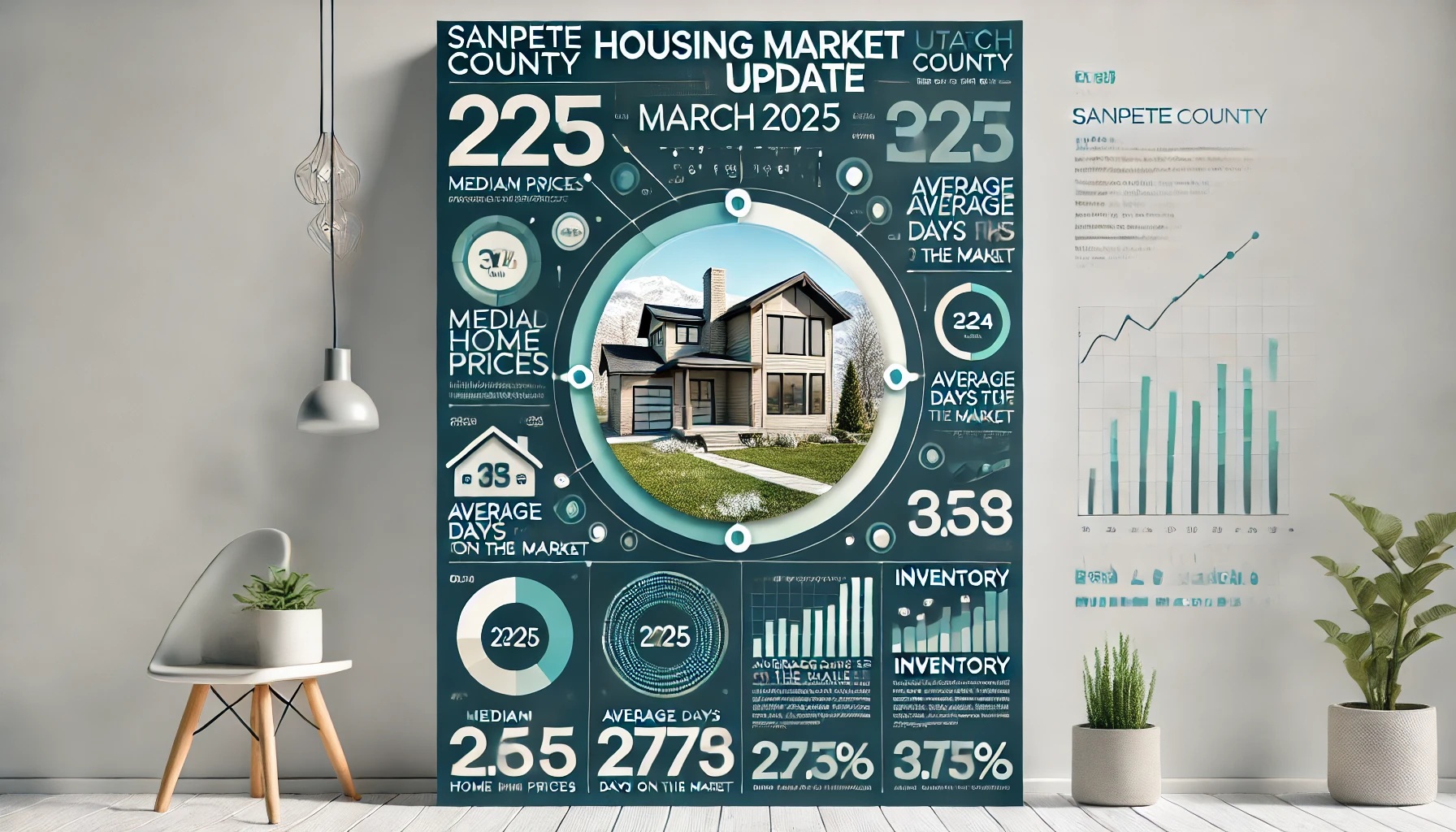
March Sanpete County Utah MLS Housing Market 2025 Forecast
February 2025 Single-Family Housing Market Data
The Sanpete County real estate market remained active in February 2025, with 14 single-family homes sold across various price ranges. Home values continue to reflect steady demand, with a median sales price of $419,950 and an average sales price of $457,492.
Sellers saw homes moving in about 64 days on average, though properties at higher price points took longer to close. Let’s dive into the numbers.
MLS February 2025 Housing Market Data Sanpete County
| Sold Price Range | # Listings Sold | Median Days on Market (DOM) |
|---|---|---|
| $250,000 – $299,999 | 1 | 132 |
| $300,000 – $349,999 | 2 | 84 |
| $350,000 – $399,999 | 3 | 52 |
| $400,000 – $449,999 | 3 | 40 |
| $500,000 – $549,999 | 3 | 49 |
| $650,000 – $699,999 | 1 | 19 |
| $900,000 – $949,999 | 1 | 166 |
MLS Market Averages
- Total Homes Sold: 14
- Lowest Sale Price: $250,000
- Highest Sale Price: $900,000
- Median Sale Price: $419,950
- Average Sale Price: $457,492
- Median Days on Market: 64
Key Takeaways from February’s Market of Homes for Sale
- Homes in the $400K range moved the fastest, selling in around 40-52 days on average.
- Luxury homes above $900K took the longest to sell, staying on the market for 166 days before closing.
- Buyers in the mid-range market ($350K-$500K) saw steady availability of homes for sale, making it a competitive price bracket.
- Lower-priced homes ($250K-$350K) were limited, showing continued demand for affordable housing in Sanpete County.
City-by-City Breakdown
- Ephraim & Manti continued to see strong demand, particularly in the $350K-$500K range.
- Spring City & Surrounding Areas saw higher-end home sales, with properties closing above $650K.
What This Means for Buyers & Sellers
Homes for Sale in Sanpete County, Utah:
✅ Mid-range homes ($350K-$500K) are selling quickly, meaning this is an excellent time to list.
✅ If you’re selling a luxury home, be prepared for a longer listing period or consider pricing strategies to attract buyers.
✅ Proper pricing and home presentation are key to selling faster.
Listings in Sanpete County, Utah:
✅ If you’re looking for affordable homes under $350K, inventory levels are low, so be ready to move fast when a listing appears. Forecasts suggest this pattern to continue.
✅ Competition is steady, in the $400K-$500K range, so having pre-approval in place can give you an edge.
✅ Higher-end homes may offer negotiation opportunities due to longer market times.
Forecast: Listing Inventory and what to Expect in Spring 2025
With warmer months approaching, Sanpete County’s housing market is expected to pick up. March and April typically bring more listings, meaning:
- Sellers should start preparing homes for market now to take advantage of increased buyer activity.
- Buyers may see more options, but competition could also rise, particularly for homes under $500K.
Mortgage Rates and Lumber Prices Expected to Drop
Economists predict that mortgage rates will decline in the coming months, making homeownership more affordable. Lower interest rates mean lower monthly payments, which could encourage more buyers to enter the market. As demand rises, home prices may increase, making it a great time for sellers to list.
In addition to falling mortgage rates, lumber prices are expected to drop, reducing construction costs. This could lead to more new homes being built, increasing inventory and helping to balance the market. Buyers looking at new construction homes may see better pricing, while sellers of existing homes should be mindful of added competition from newly built properties.
📞 Have questions about the market? Let’s talk! Contact me here for a free consultation.
Top 10 Reasons to Buy a Home in Sanpete County, Utah in 2025

Top 10 Reasons to Buy a Home in Sanpete County, Utah in 2025
Looking for the perfect place to buy a home? Sanpete County, Utah, is a hidden gem in the heart of the state, offering a rare blend of affordable real estate, breathtaking scenery, and a welcoming small-town atmosphere. Whether you’re a first-time buyer, a growing family, a retiree looking for peace and quiet, or an investor seeking high-potential properties, this area has something for everyone.
With steady property appreciation, strong rental demand, and a thriving community, Sanpete County presents an incredible opportunity to build equity and invest in your future. From charming historic homes and spacious farms to modern developments and vacation retreats, there’s a property here to suit every lifestyle.
As a local REALTOR® with Century 21 Essentials Realty, I specialize in helping buyers find the perfect home that meets their needs and budget. If you’re considering a move or investment in Ephraim, Manti, Spring City, or any of the surrounding areas, I’m here to provide expert guidance every step of the way.
Here are the top 10 reasons why Sanpete County should be on your radar in 2025!
#1 Affordable Housing Trends in Sanpete County, UT
Sanpete County has some of the best home prices in Utah, attracting both home buyers and investors. Compared to bigger cities like Salt Lake or Provo, you get more house for your money, making it an attractive option for home buyers. The median listing price here makes homeownership more affordable for buyers. With the rising cost of living in major metro areas, more people are looking toward rural communities like Sanpete County for homeownership opportunities that provide both financial stability and a high quality of life. Whether you’re a first-time buyer or looking to downsize, Sanpete offers great value in today’s competitive market.
#2 Find the Best Homes for Sale in Sanpete County, Utah
Looking for options? You’ll find single-family homes, cabins, farms, and real estate investment properties all over Sanpete County. Popular towns like Ephraim, Manti, and Spring City offer unique properties, whether you want a quiet home or land to build on. Many of these areas feature historic homes, modern developments, and acreage lots that appeal to families, retirees, and investors alike. Plus, with a growing demand for rural living, home values in these sought-after locations are expected to appreciate steadily over the next few years.
#3 2025 Real Estate Market Trends: Why Buy a Home in Sanpete County?
Home values in Sanpete County are steadily rising, making it a great place to buy and build equity. Purchase statistics show a strong market with homes selling at competitive prices. Whether you’re buying a home to live in or as an investment, it’s a solid choice for future mortgage savings. With low interest rates still available, locking in a property now could mean significant long-term financial gains. The county’s stable housing demand, along with its appeal to both primary residents and investors, makes it a smart market to enter in 2025.
#4 Low Foreclosure Risk: A Safe Real Estate Investment in Sanpete County
One big plus in Sanpete County is the low number of foreclosures in the housing market, which benefits sellers. This means the market is stable and reliable, making it less risky for buyers and investors. It also helps property values stay strong over time. A low foreclosure rate also reflects economic stability, a responsible lending environment, and a strong sense of community ownership. This makes buying a home in Sanpete County a safer investment compared to areas with high foreclosure risks.
#5 Enjoy Small-Town Living: Why a Home in Sanpete County is a Smart Move
Want to escape city traffic and noise? Sanpete County offers a relaxed, small-town vibe. People here enjoy quiet streets, low crime rates, and friendly neighbors. It’s the perfect place to slow down and enjoy life, making it ideal for long-term residential living. With its slower pace, strong community ties, and scenic surroundings, Sanpete County is an excellent place for raising a family, starting a homestead, or simply enjoying retirement away from the hustle and bustle of urban centers.
#6 Outdoor Recreation & Lifestyle: A Major Perk of Buying a Home in Utah
If you love the outdoors, you’ll never be bored here! Hiking, fishing, hunting, and ATV riding are just minutes away. The Manti-La Sal National Forest offers incredible trails and campgrounds, plus great spots for snowmobiling in the winter. Sanpete County is a four-season recreational paradise, attracting nature lovers and adventure seekers alike. Whether you want to spend weekends exploring national forests or take advantage of nearby reservoirs and fishing spots, outdoor activities are just outside your doorstep.
#7 Investing in Sanpete County Real Estate: Is it Risky or Rewarding?
With Snow College in Ephraim, there’s a steady demand for student rentals. Vacation rentals are also popular, especially for visitors who love outdoor activities. If you’re looking for an investment property, Sanpete County has great opportunities. Rental properties in college towns tend to have lower vacancy rates, and with Utah’s growing tourism industry, short-term rental investments in this area continue to be a profitable option. If you’re considering an investment property, I can help you find the right one and even assist in securing quality renters.
#8 Low Property Taxes & Housing Affordability in Sanpete County, UT
Utah is known for low property taxes, and Sanpete County is no exception for home buyers looking to invest in residential properties with the potential for appreciation. This means you save money every year compared to buying in other states. With more homeowners facing rising property taxes nationwide, Sanpete County remains one of the more budget-friendly locations to own a home. Lower property taxes mean lower monthly mortgage expenses, making homeownership more accessible to buyers of all income levels.
#9 Strong Community and Local Economy
Sanpete County has a tight-knit community and neighborhoods with friendly people. There are great schools, healthcare services, and local businesses that keep the area thriving. Events like festivals and rodeos bring people together and make life here even more special. The county is also seeing steady job growth, with opportunities in education, healthcare, agriculture, and small businesses. Community-driven initiatives help preserve the area’s charm while supporting new development, making it an inviting place for families and entrepreneurs.
#10 Convenient Location
You get the best of both worlds—peaceful rural living with easy access to bigger cities. Sanpete County is just a few hours from Salt Lake City and Provo, making it great for those who want space while still being close to city amenities. For commuters or those who enjoy occasional trips to the city, Sanpete County provides an ideal balance. You can take advantage of major city conveniences while still enjoying the affordability, peace, and open space that rural Utah has to offer.
Ready to Find Your Home in Sanpete County?
If you’re thinking about purchasing a home or planning to relocate to Sanpete County, now is the time! As a top Sanpete County real estate expert, I can help you locate the best homes, negotiate with sellers, and handle every step of the buying process. Whether you’re a homebuyer looking for your dream home or a homeowner ready to sell, I know the local market inside and out.
Contact me REALTOR David Sedlak your top Sanpete County real estate agent today to find the perfect home and make your move with confidence!